

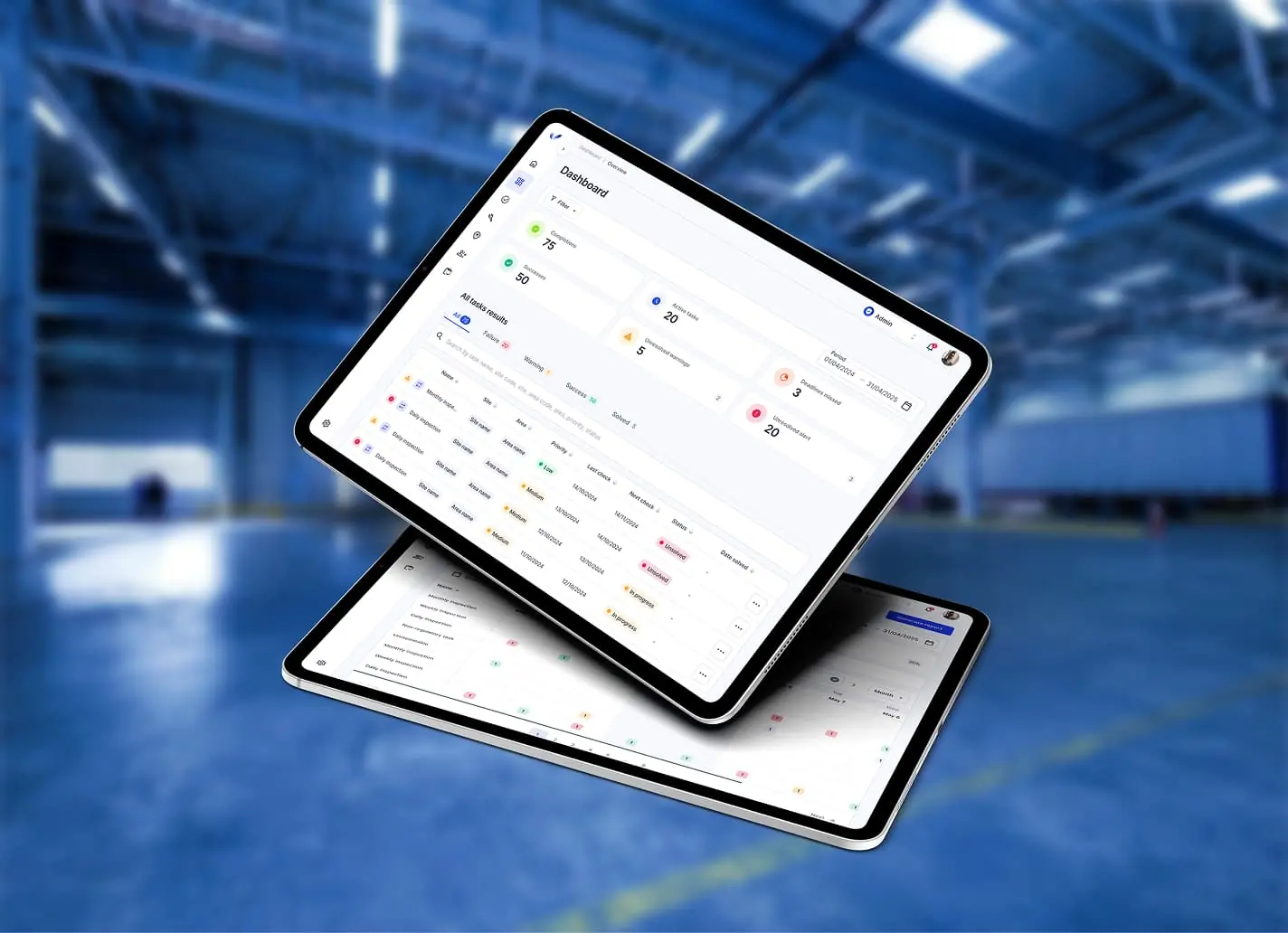
Compliance, and traceability, digital transformation is no longer optional – it’s strategic. Yet, only 30% of digital initiatives in the industrial sector meet their goals (McKinsey). Why? Because success depends on more than just adopting new tools. Here are the 5 essential pillars to successfully digitize operations in industrial companies.
1. Clear, Operational Objectives
Digitalization only makes sense when it solves real-world problems. Examples:
- Cut manual input errors by 70%
- Save 30% of time on inspections
- Reduce internal audit preparation time by 50%
70% of digital projects fail due to lack of clear objectives (BCG).
2. A Unified Platform, Tailored to Field Operations
One of the main roadblocks to digital transformation? Fragmented tools:
- A CMMS here, a quality app there, spreadsheets for safety…
- Result: data silos and massive time loss.
High-performing companies adopt a unified solution:
- Centralized data
- Customizable digital forms per department
- Mobile and offline access
Example: An agro-industrial company reduced audit prep time by 40% by consolidating maintenance, safety, and quality operations into one tool.
3. Real-Time KPIs to Drive Performance
Data is worthless if not actionable. With digital tools, companies can track:
- % of anomalies detected and resolved
- Site-level compliance rates
- Mean Time to Repair (MTTR)
Some Datizy clients cut their non-compliance rate by 3x in under 6 months, just by leveraging real-time data insights.
4. Team Buy-In Is Essential
Digital tools fail without field adoption. To ensure team engagement:
- Involve supervisors early on
- Train directly in field conditions
- Highlight how the tool helps operators daily
According to Forrester, lack of team buy-in is the #1 reason (65%) why industrial digitization projects fail.
5. Long-Term Vision: Compliance, Scalability & Innovation
Digital transformation is not a one-shot project – it’s a continuous effort. It must:
- Stay aligned with evolving standards (ISO, HSE, ESG…)
- Scale with the company’s growth
- Integrate AI to automate data analysis and surface trends
Conclusion
Succeeding with digital transformation in industrial environments means much more than digitizing forms. It requires a structured approach, actionable KPIs, smart tools, and strong operational engagement. The result? Smoother audits, stronger compliance, and real operational gains.